A Hidden Conversation:
Da-Dandy and a Possible Duchampian Rebuke
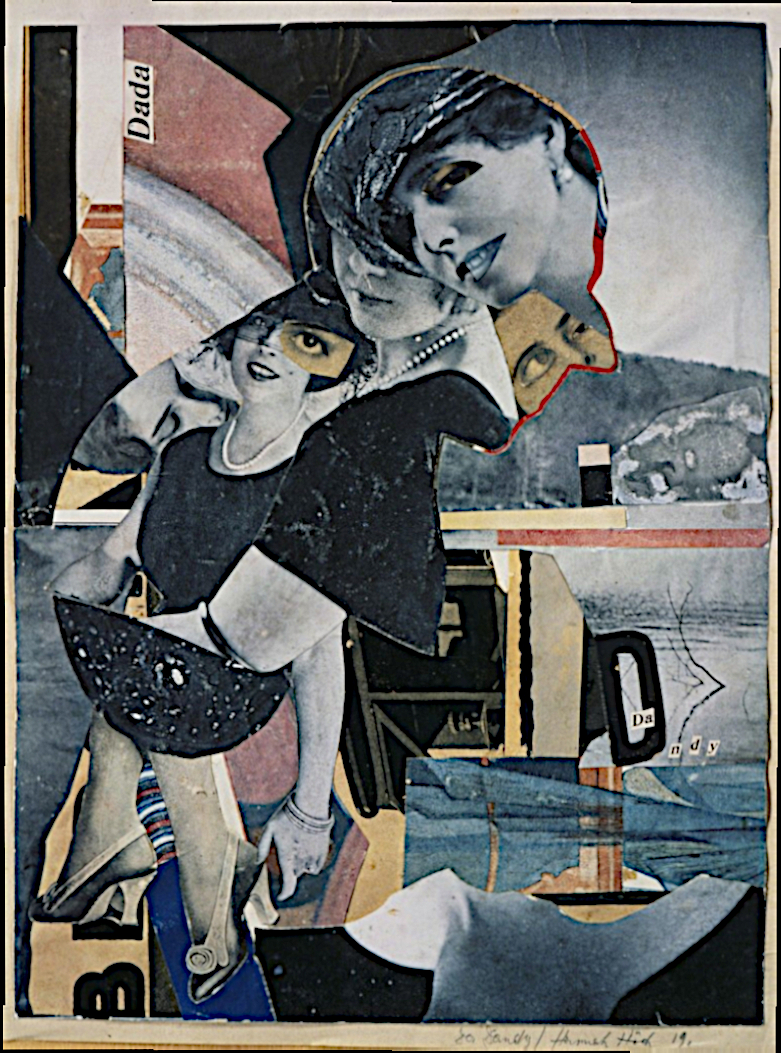
In 1919, Hannah Höch produced one of her most striking photo-collages:
Da-Dandy. Among its layered fragments is a haunting profile of a man watching over the scene like a ghost. The piece is rich with gender critique, cultural parody, and defaced glamour—but there may be another layer buried within:
a veiled reference to Marcel Duchamp.
Da-Dandy includes not only stylistic echoes but also conceptual ones. The juxtaposition of bourgeois elements, the parody of glamour, the ambiguity of identity, the defacement of visual hierarchy—each of these had already been explored by Duchamp, Picabia, and Man Ray in New York.
This might have been more than homage. It might have felt, to Duchamp,
like exposure.
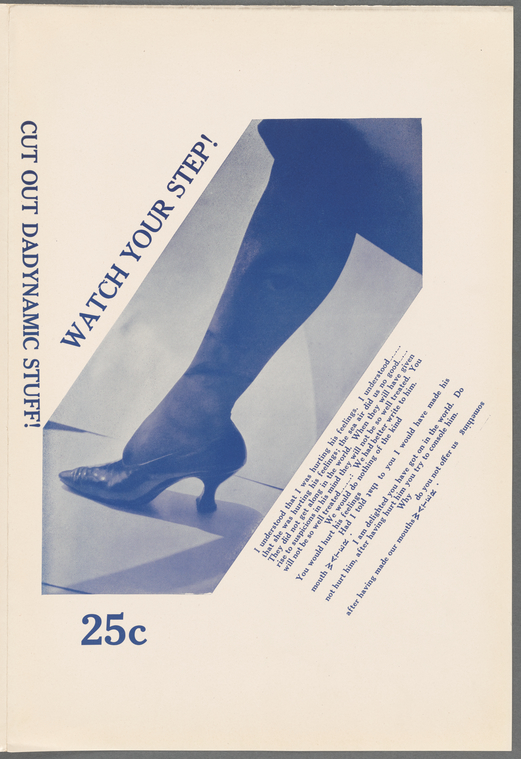
Shortly afterward, a strange artwork appears: a small offset cover design printed for the publication New York Dada. It bears what appears to be a message:
“WATCH YOUR STEP!” and “CUT OUT DADADYNAMIC STUFF”
Could this be a reference to his own cut out profile, or just photomontage in general.
Those warnings feels personal.
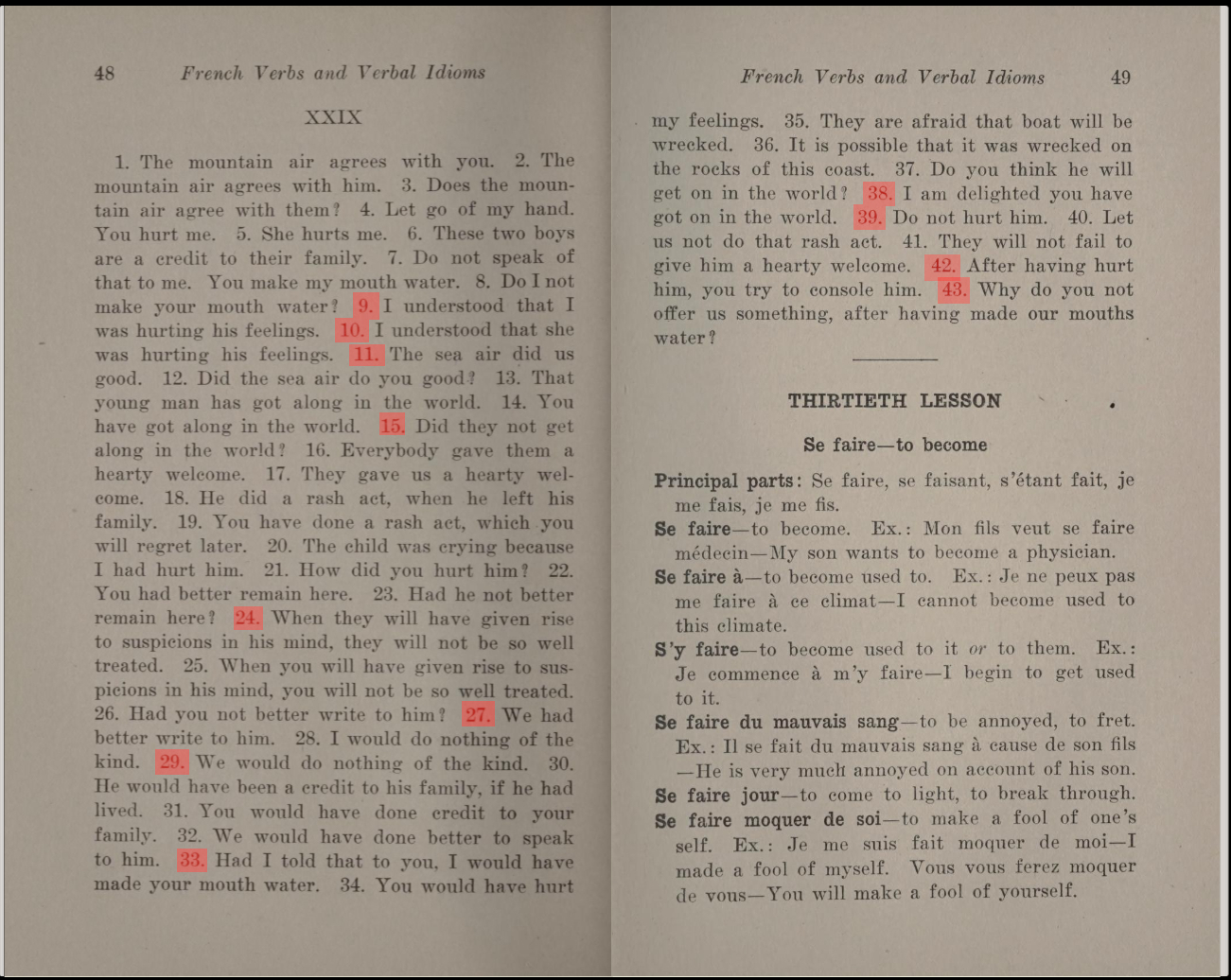
The leg is a Stieglitz photograph, repurposed, recontextualized. His artwork set beside a string of text clipped from “French Verbs and Verbal Idioms in Speech”.
Was this aimed at Höch?
A reprimand for using a visual language she wasn’t meant to inherit?
A reaction to seeing Duchamp’s code performed by someone outside the
New York circle—and with too many of the gestures, too visibly deployed,
and too little disguise?
The image speaks in layers, just as Da-Dandy did. The rebuke, if it is one, is sharp. Wrapped in precisely the kind of aesthetic weaponry Duchamp himself had forged: ambiguity, elegance, irony, and erasure.
The angled text below the leg comes from a French-English grammar textbook:
“French Verbs and Verbal Idioms in Speech”
by Baptiste Méras and Émile Jules Méras, published in 1909 by Sturgis & Walton Company, New York.
French Verbs and Verbal Idioms in Speech